
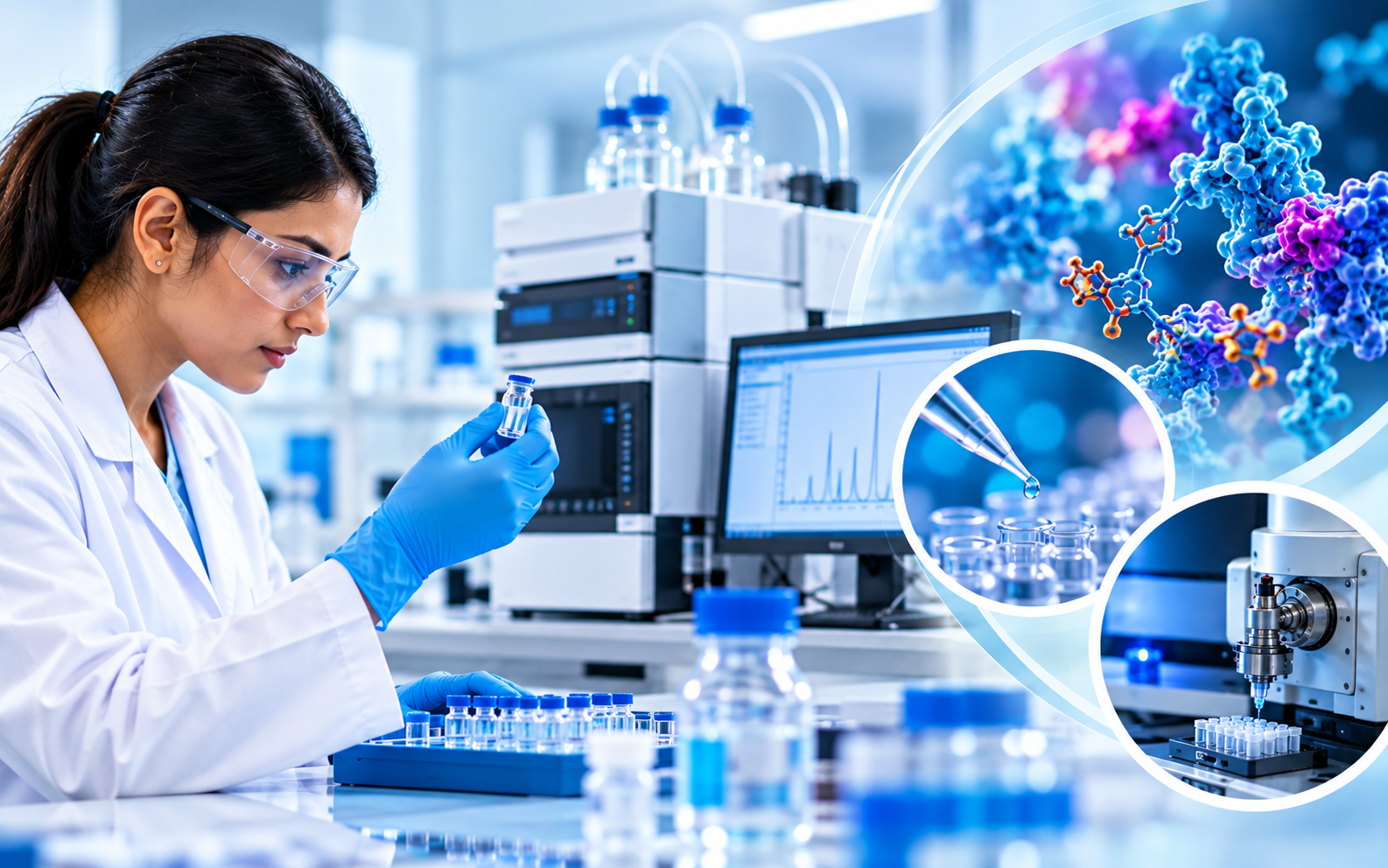
Large molecules and complex active pharmaceutical ingredients demand more from analytical methods than simple small-molecule assays. Selectivity, sample preparation and system suitability all require deliberate design.
Start With the Analytical Question
Before selecting a column or mobile phase, define what the method must demonstrate: potency, purity, identity, degradation behaviour or a combination. The intended purpose drives every subsequent decision.
Build Selectivity Systematically
Screen stationary phases, pH and organic modifiers in a structured sequence rather than changing several variables at once. Record the resolution between the principal analyte and known impurities at each step.
Design Sample Preparation for Reproducibility
Complex matrices and excipients can interfere with analysis. Evaluate extraction efficiency, solution stability and filtration effects early so they do not surface as precision problems during validation.
Validate Against the Intended Use
Specificity, linearity, accuracy, precision, robustness and solution stability should be assessed against acceptance criteria that reflect the method’s purpose and applicable ICH expectations.
Need a robust method for a challenging molecule? Explore HPLC method development →
Related Articles

Key Considerations for Stability Testing
From study design to data interpretation — the critical factors that make a stability program reliable, defensible and decision-re...

Navigating Evolving Regulatory Expectations
Inspection readiness starts with traceable data. A practical look at how analytical documentation supports compliance as expectati...